annie
annie 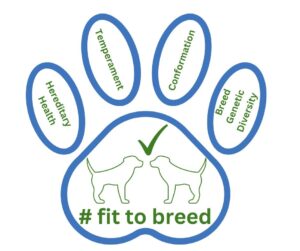 Who are the team at Paws Against?
We are a group of dog lovers who wish to see future generations of dogs lead longer, healthier happier lives through building awareness of hereditary diseases and campaigning for change. We have no financial interest in the dog breeding industry we are purely speaking out for the dogs who can’t speak for themselves. We try to find the science to back up our beliefs and have talk to many experienced people in the industry and attended courses to learn as much as we can.
Summary
- Q1 Public Health – Hereditary Disease and dog aggression, financial strain & mental health issues
- Fit to breed certificate for all breeding dogs: to be issued by VET – reduce burden on LA inspectorshttps://www.bva.co.uk/media/4145/guidance-complying-with-the-fit-to-breed-assessment.pdf
Hereditary Health – Vet to check hereditary health certificates relevant to breed
Conformation – Vet to check conformation – ability to breath, give birth naturally etc
Temperament – Behaviourists – assess temperament and issue certificate to go to vets
Genetic Diversity – list of acceptable genetic COI per breed to be checked off against by vet
- All breeders to be licensed and dogs bred to the HIGHEST standard and section 6.5 clarified with additions
- More LA inspections/enforcement paid by income from :
- Pet food manufactures
- Pet insurance companies
- Licensing fees
- Hefty Fines for non-compliance
- Puppy sales – welfare tax on each puppy sold
- Awareness campaign
- TV/Radio/Social Media “fitness to breed” a Kite Mark of responsible breeding
- Puppy buyers encouraged to only buy from licensed breeders (All breeders licensed) whose dogs have a fitness to breed certificate
- Short Film showing the realities of owning a dog not just the fluffy bits, but the chewing, destruction, training, socialisation and habituation, temperament etc needed etc.
Unscrupulous breeding and importation:
- Public health:
Some of the rise in dog bites and aggressive dogs can be attributed to poor breeding practices.
- It starts with looking at the parent dogs temperament and those of the dogs family – ALL breeding dogs should have a temperament assessment by a certified behaviourist prior to breeding
- It goes on to not breeding with dogs with hereditary diseases which could cause pain and discomfort to offspring.
- Imagine having a permanent migraine x 100 ( such as a cavalier with SM)
- or chronic back ache (IVDD)
- or joints that hurt (ED & HD)
- or permanent itchy skin, (due to excessive skin folds or inherited diseases)
- or the inability to breath comfortably (BOAS)
You would be bad tempered and grumpy if you had chronic conditions such as these – in humans we can talk about it ask for medication – in dogs they just react and that can be a simple warning sign such as ears going flat or withdrawal that isn’t read or a growl or snap or a great big BACK OFF I feel rubbish! And one of the worst things is it has all been NORMALISED – if you get a bulldog/pug/frenchie etc it does snort and snuffle, if you get a big dog it will have arthritis etc etc….
- Associations between atopic dermatitis and anxiety, aggression and fear based behaviours in dogs: https://meridian.allenpress.com/jaaha/article-abstract/58/4/161/483618/Associations-Between-Atopic-Dermatitis-and-Anxiety?redirectedFrom=fulltext
- Genetics of inherited skin disorders in dogs
https://www.sciencedirect.com/science/article/pii/S1090023321001775
- Next it’s looking after the bitch carrying pups as with humans, anxiety in pregnancy can impact the nervous system of the puppy/baby meaning in layman’s terms it is born with its nervous system on “higher alert” than another that’s mother wasn’t swamped with stress hormones etc…. So something which a puppy which has a “normal” nervous system wouldn’t bat an eyelid might send a puppy whose nervous system is already on high alert running for the hills or jumping for the jugular. So a bitch or young puppies being transported long distances have already set the nervous systems up to be on high alert meaning a potentially more nervous/aggressive disposition.
- Then it’s Rearing the puppies – habituation/socialisation – following a program from birth right up to leaving with the new owner – gradual exposure (its called in trauma therapy) to sights and sound, people and situations in a gentle non overwhelming way – not just sticking on a sound clip of noises whilst they stay in the same rearing pen with no access to outdoors or other surfaces etc etc…..
- Finally new owner education – on dealing with fear periods – continuing gentle exposure etc etc…..learning about how dogs express pain and discomfort
The financial and mental toll on the puppy buyer of buying a puppy which then has a chronic or life limiting illness is huge and cannot be ignored. The puppy buying public needs to have a “kite mark” of excellence to help they buy responsibly.
- Ownership and animal welfare:
- There needs to be a huge information campaign on radio/tv/social media about the “real” implications of dog ownership – this should be funded by pet food manufactures, pet insurance companies etc also aimed at educating puppy buyers about buying responsibly once there are enough responsible breeder to supply the pet dog market.
- This information campaign could also be expanded to include information on what owning a dog is all about in the real world – it has to be realistic describing not only the lovely fluffy nice bits but the hard first year when the puppy is young and needs so much time spending on it to ensure it is fit to go out into society and is not a danger to anyoneand it grows up to be a well adjusted adult dog.
- There could even be a short online course potential puppy buyers could take prior to buying a puppy – this could even be rolled out into schools.
Current preventative measures:
- The current legislation only applies to those very few breeders who are licensed the thousands of other breeders come under no legislation what so ever except the Animal Welfare Act 2006 “need to be protected from pain, suffering and disease” which as far as we re aware has never actually been implemented regards breeding (or if it has very infrequently) yet thousands are breeding with dogs who have hereditary diseases, poor conformation etc yet nothing is ever done.
Funding for LA inspectors/vet fees could come from
- Pet Food Manufacturers
- Pet insurance companies
- Licensing fees
- Hefty Fines for non-compliance
- Puppy sales – welfare tax on each puppy sold
The current legislation 6.5 No dog may be kept for breeding if it can reasonably be expected, on the basis of its genotype, phenotype or state of health that breeding from it could have a detrimental effect on its health or welfare or the health or welfare of its offspring. We believe “reasonably be expected” is ambiguous and provides a loop hole should anyone actually be taken to court. Also lay people are unlikely to know what “genotype and phenotype” mean.
In some instances only the dogs at the initial inspection are assessed regards health certificates etc, after that so long as a breeder only keeps to the number of breeding dogs they have a license for, dogs may come in and never be assessed. A breeder should notify the LA when they are thinking of breeding from a particular dog to ensure it is assessed prior to mating. Of course the “fit to breed” certificate (see below) would usurp this and reduce burden on LA.
There is no LA check on number of litters a sire can produce which is contributing to the reduction of genetic diversity in some breeds.
Most crossbreeds such as the various doodles are not acknowledged by the kennel club so are not accepted into the assured breeder scheme. Therefore unless the breeder is responsible and is licensed there is no checks what so ever.
8. We believe that by allocating each individual dog a “Fit to Breed” certificate may together with an information campaign for puppy buyers showing it as a “kite mark” for puppy buyers to be assured they are buying from a reputable breeder whose dogs have been assessed as fit to be bred from reduce instances of irresponsible and rogue breeders.
- Not only would this contribute to the reduction in hereditary diseases being passed on through the generations but would also reduce dogs which are conformationally compromised such unable to give birth naturally from being bred.
- The necessity of a “fit to breed” certificate and more informed savy puppy buyers would mean they would be aware more of buying from unscrupulous breeders which would hopefully put them out of business
- Part of this assessment would be temperament and by setting up a national network of behaviourists to assess the temperament of any potential breeding dog by doing so would hopefully make our dog population safer within society.
- This together with all breeders being licensed ( and to the higher standard) and thereby having to abide by the highest of welfare standards should improve the health and wellbeing of our dog population significantly.
- A puppy buyer would then know to only buy from a licensed breeder whose dogs are deemed “fit to be bred” .
- This would encourage puppy buyers away from buying “any old puppy” advertised which may well have been imported or born in “puppy mills” .
- With the addition of a “fit to breed” certificate it would free up LA inspectors to investigate and prosecute poor breeding practices etc as they would just have to check the breeder has these certificates and not need to examine individual dogs etc. If fines were significant the monies raised could go towards funding more LA enforcement officers.
The team at www.pawsagainst.co.uk February 2023