annie
annie About myself and my dog
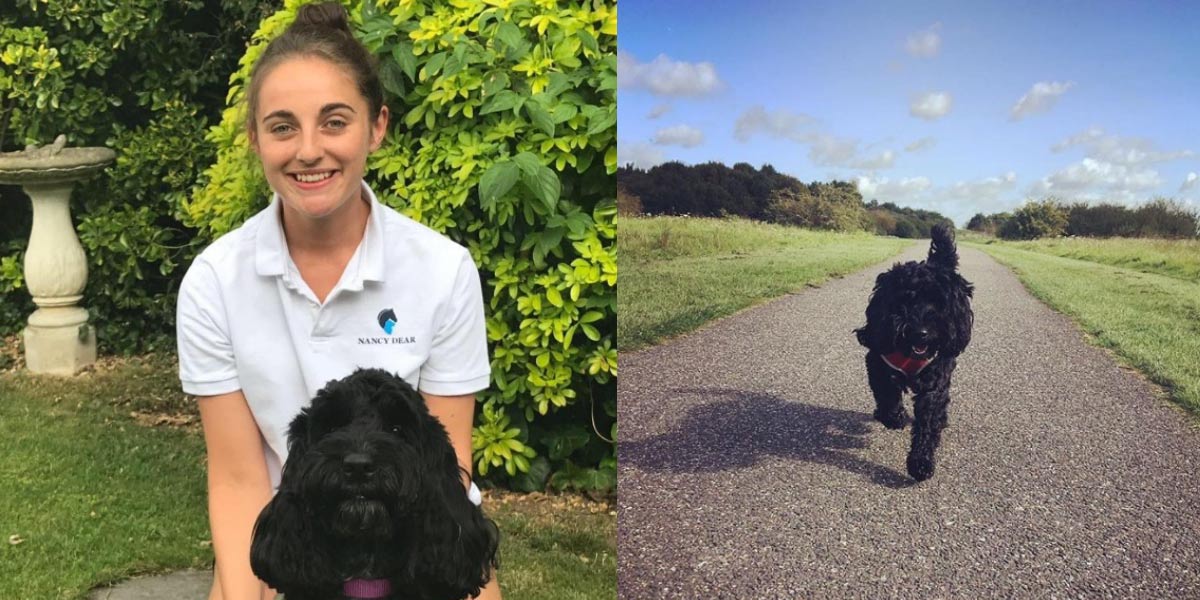
Hi, I’m Nancy and Paws Against have asked me to write this blog to discuss my views on hereditary diseases from the perspective of a Veterinary Physiotherapist. I qualified as a Vet Physio just over 3 years ago, and I work in the same way a human physio would do, offering therapy to rehabilitate canine patients and manage long term conditions such as elbow dysplasia or osteoarthritis.
I myself have a 5 year old Cockapoo called Buzz, who was diagnosed with mild hip laxity (dysplasia) when he was 1. The signs were very subtle, and he could have easily been mistaken for a ‘lazy dog’, but I now believe that these were the early signs of hip pain – not wanting to play with other dogs to protect himself from further injury and not showing the same amount of energy as other dogs his age due to pain. Buzz was very fortunate to only be mildly affected, and we have been able to manage his condition with strengthening exercises, restricted walks, and therapy for pain management.
Which diseases impact dogs the most and do I see the most?
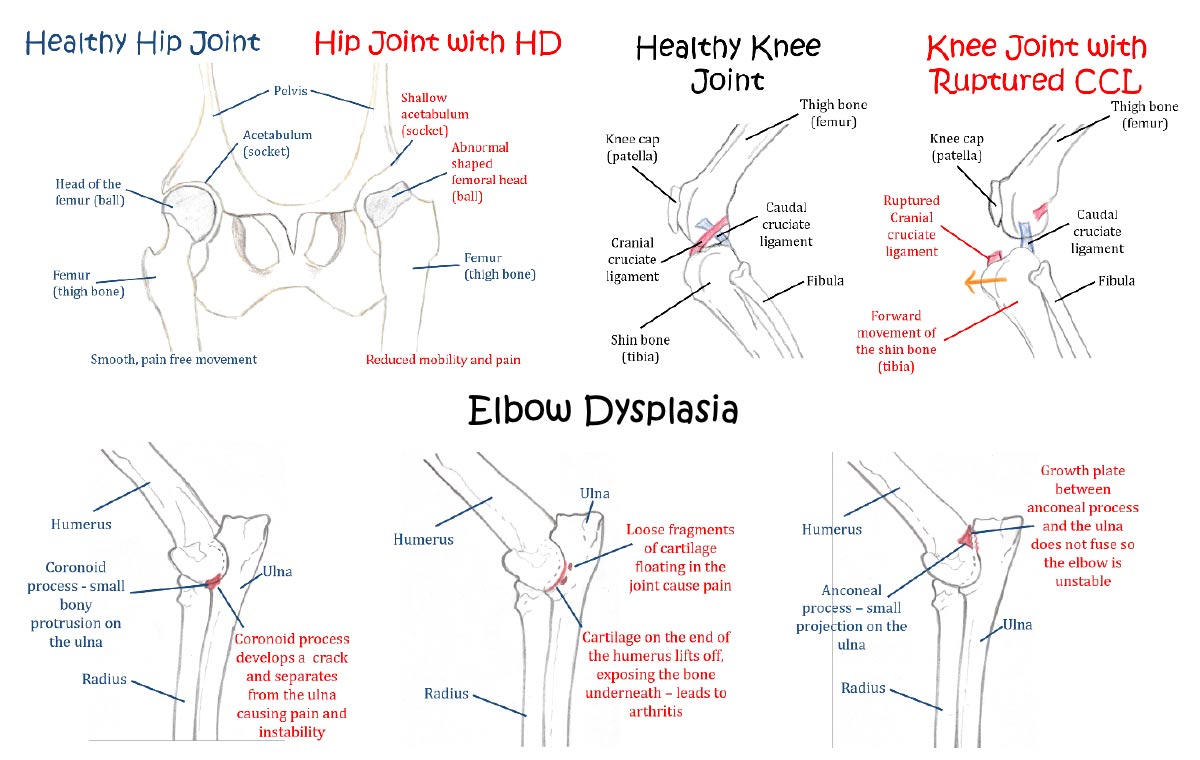
A hereditary disease is one that has been passed down from the parent to puppy. As a physio the conditions I see most commonly are hip dysplasia (HD), elbow dysplasia (ED), cruciate disease, intervertebral disc disease (IVDD) and degenerative myelopathy (DM).
To break this down a bit further, dysplasia means abnormal growth, of either the hip joint or elbow joint. As the puppy grows, the joint does not develop correctly, and this leads to pain and often a degree of lameness. I often see elbow dysplasia cases at an earlier age, as the dog naturally bears more weight on the forelimbs, so problems can become apparent quicker – obvious limp and discomfort. Hip dysplasia on the other hand can be harder to spot, especially in the milder cases, as the signs can be misread or not picked up on until the problem worsens or flares up. The other orthopaedic condition I commonly treat is cranial cruciate ligament disease or rupture, in which a key ligament in the knee joint breaks down, which results in instability and pain.
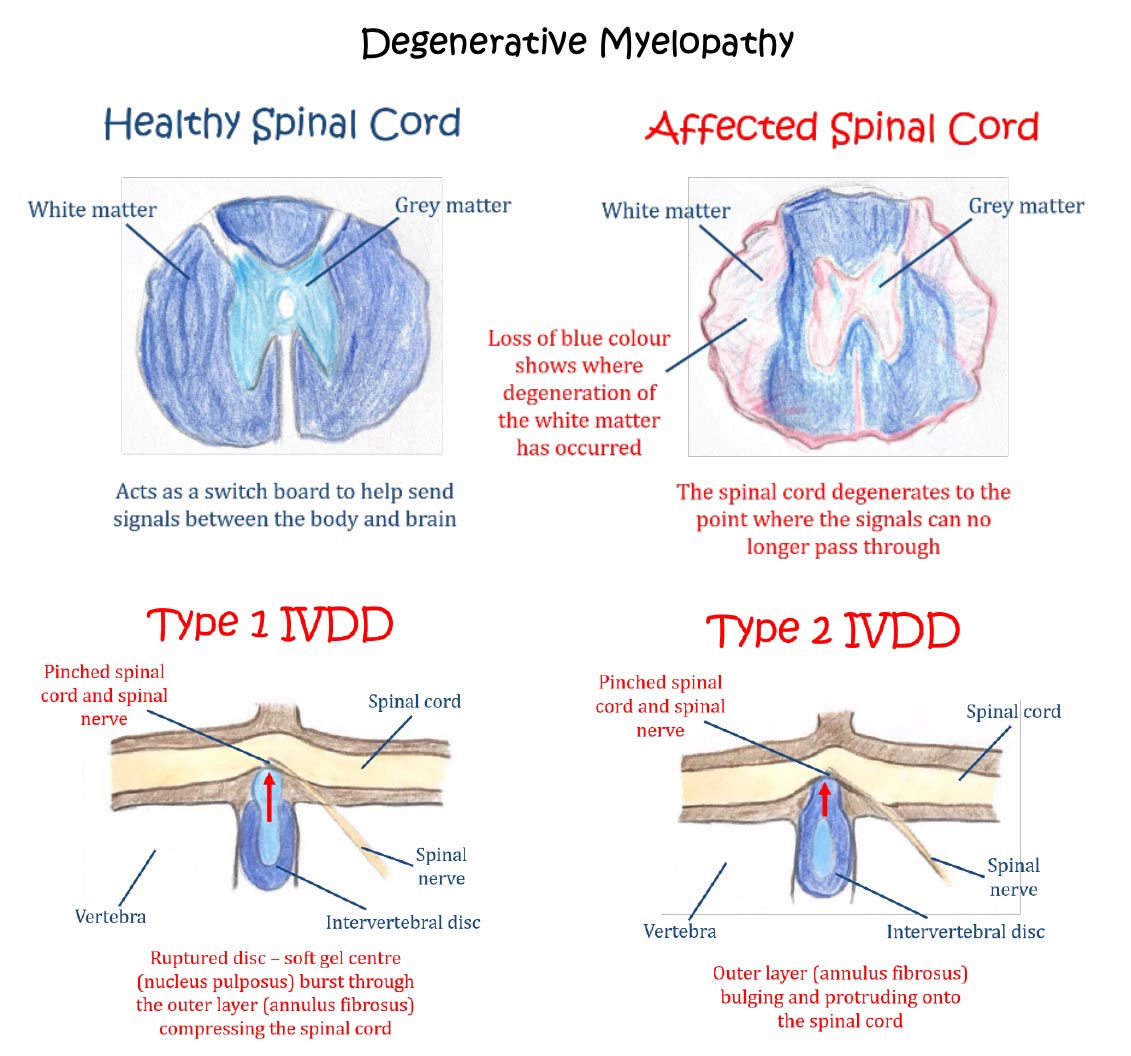
Prior to qualifying, I did not see as much of the neurological conditions which can be genetically linked, so I was surprised to find how often I was receiving referrals for new patients suffering with spinal problems. Intervertebral disc disease occurs when the discs between the vertebrae break down, causing damage to the spinal cord. This condition can be very serious, causing paralysis and incontinence in the worst cases. In the milder cases, the patient can be rehabilitated to regain movement and return to ‘normal’ life. On the other hand, there is no available cure or treatment for Degenerative Myelopathy, a condition defined by the breakdown of the spinal cord, causing gradual paralysis. For these dogs, my role is to slow the progression of the disease and keep them comfortable for as long as possible.
How do hereditary diseases impact dogs and their owners?
Unfortunately, hereditary diseases can have a huge impact on dogs and their owners in both the short and long term. Depending on the severity of your dog’s condition they may need surgery. This can be costly, and the recovery period can be difficult. Prolonged periods of rest will often be recommended which can be boring for your dog, leading to ‘naughty’ behaviour as they have lots of energy to burn! As an owner, it can be hard to restrict your dog, especially if they are normally very active. No one likes to see their dog feeling down. Owners may be required to carry out exercises at home to help with recovery. This can be a daunting task, yet in many cases, this is where a physio could step in to help.
In the long term, secondary osteoarthritis can develop alongside hereditary conditions. This will require lifelong care and consideration, to keep your dog comfortable and mobile, which is a big task. For example, owners may need to make adaptations to their home – block off the stairs, lay down rugs to stop slips/trips – or adaptations to their dog’s exercise – reduce time off lead or no ball throwing.
Sometimes, dog and owner will have to learn to live with the condition if surgery is not an option, or in milder cases where surgery would not be recommended. This again is a big commitment as it could mean restricting your dog’s exercise long term or keeping them on medication for life.
What sort of work do I do with these affected dogs?
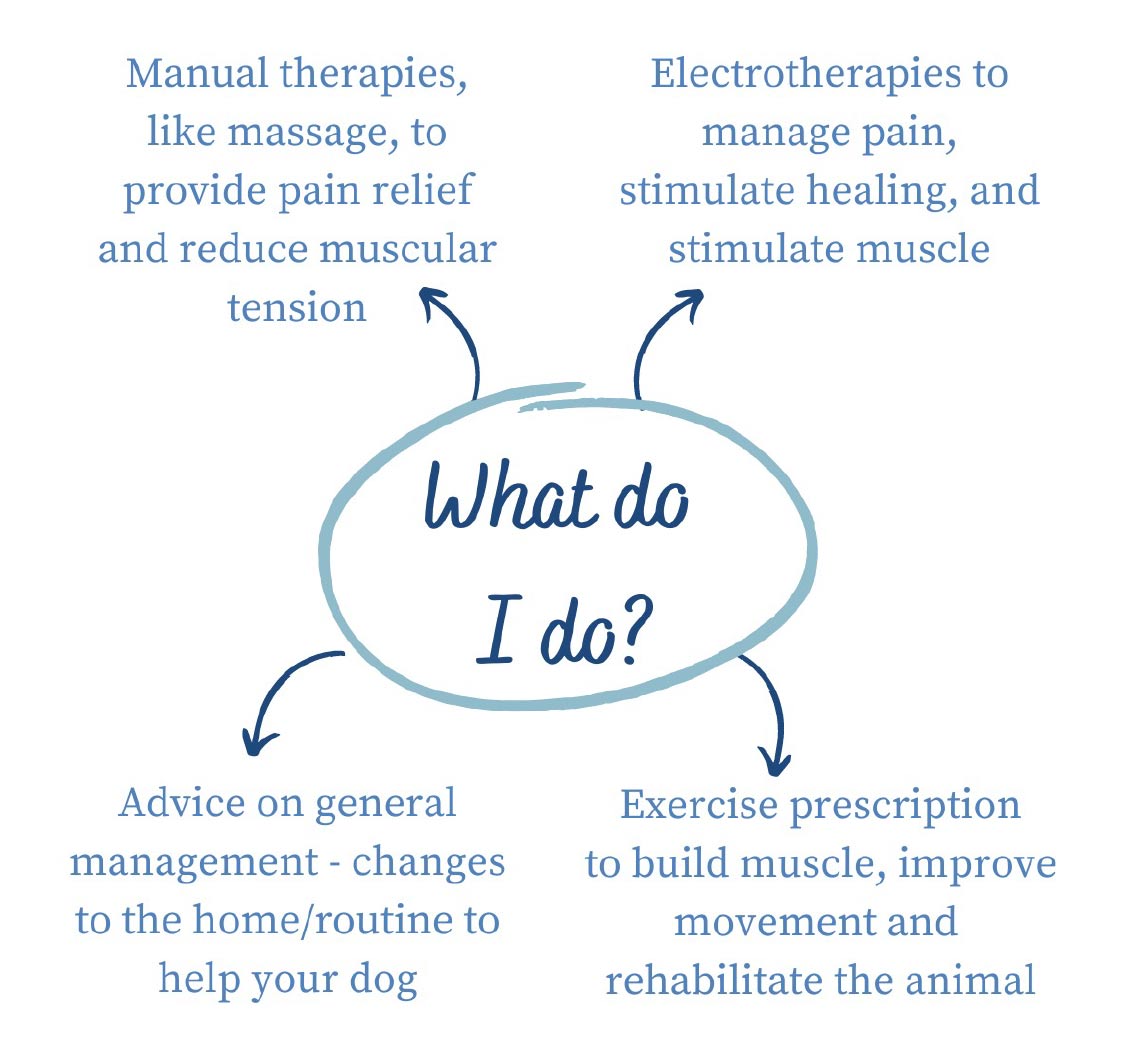
As a physiotherapist, I use a variety of methods in my treatment including manual therapies, electrotherapies, and remedial exercises to manage the conditions previously mentioned. The diagram below gives a brief summary of what I do.
Health screening – when is it needed?
There are multiple tests available to screen for potential problems in dogs, for example hip scoring to identify if hip dysplasia is likely to be passed onto puppies. I would strongly advise that if you are wanting to use your dog for breeding, do your research and speak to a vet. Certain breeds are more genetically prone to suffer with certain conditions, your vet will be able to explain further and advise on the necessary screening. It is equally important, when buying a puppy, to do your research into the breed and the potential health risks. Responsible breeders should be willing to prove that the mother and father have had the necessary health checks, to assure you that the chances of a condition being passed on are low. You can find lots more information on health screening on the Paws Against website.
My views on health screening
I believe health screening is an essential step towards reducing the prevalence of hereditary conditions and breeding healthier animals in the future. Although sometimes the problems could occur with a set of ‘healthy’ parents, by simply testing and checking, breeders can take more responsibility and hopefully less dogs will be affected by these debilitating conditions.
If you would like more information on any of the conditions discussed here, or on the role of a physio I am happy to answer questions via email – vetphysionancy@outlook.com