 annie
annie Protecting the health of the dogs of our future
 Never has the health and wellbeing of our dogs been such a trending topic. With the groundbreaking ruling in Norway drawing a line in the sand, we as breeders need to take a stand and protect the health of the dogs of our future.
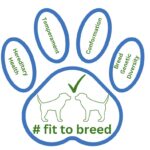
For all those breeders out there, who diligently and ethically practice breeding, we salute you. If you consider temperament, health, and confirmation above all else when selecting a breeding pair, you are positively contributing to our future canine friends.
If you want to learn more about this, then read on, these topics will continue to be at the forefront of breeding debate until it becomes standard practise, so let’s make a start!
But it is not just breeders who need to take note. All those potential puppy buyers out there, the change starts with YOU too. You have the power to ask for evidence of health and temperament testing. If the breeder cannot provide it and you continue with the purchase regardless be under no illusion, you are creating a trade. This enables breeders who are not ethical to continue to make money regardless of their practises. It is not rescuing a puppy, it is lining the pockets of the unethical breeder.
Health Testing
Are you considering breeding a litter? Then you must consider every aspect in as much detail as possible. When you choose to create life and breed puppies then the responsibility to create healthy offspring goes along with it.
There are multiple internet resources where you can research for free, the required health testing for your breed. Even if you are cross breeding, you still need to test and screen for hereditary dieases. The Kennel Club and the Dog Breeding Reform Group have a whole host of information on this, and you can quickly and easily find the tests you need to do prior to breeding a litter.
There are several methods of testing, some involve a vet, and some can be done using a simple swab at home, either way it is a breeder’s duty to ensure that they have undertaken all the relevant testing for the breed or breeds they are mating.

All too often we see mating’s where the sire is tested, but the dam is not. Whilst this is undoubtedly better than nothing, a good, ethical breeder would not even consider this an option. It is vital that BOTH parents are healthy and clear of hereditary disease before mating. Otherwise, you run the risk of breeding dogs that still have a high chance of developing avoidable conditions and diseases.
If this is not enough to spur you into ensuring all your breeding dogs are appropriately tested, be warned. In recent times several breeders have faced legal proceedings when the dogs they bred have developed avoidable hereditary diseases. These breeders were ordered to pay for the cost of ongoing treatment, and to compensate the owners for the heart ache and distress caused by their pet being ill.
Temperament Testing
Ultimately you live with your dog. Not is colour or gender, and yet so often puppies are bought using these criteria only. It is not true that at 8 weeks your puppy is a blank canvas that the new owners are responsible for training and shaping into the dog they want.
Through our understanding of breeds and their traits, the use of tried and tested methods of socialisation and epigenetics that effect our dogs even before they are born, we know more now than we ever did about dogs and their behaviour.
We as breeders can learn to observe and understand the puppies from a very young age and get a clear and distinct idea on their likely temperament and ongoing traits. This enables us to place them in the most appropriate homes for long term success.
We are also able to analyse and evaluate our adult dogs prior to mating them. We can look at trainability, reactivity, guarding and sociability and not only assess their suitability as a dog to be bred from, but to consider how those behaviours will blend with the behaviours of the proposed partner and ultimately come out in the resulting puppies.
Anxious and reactive dogs are more likely to breed anxious and reactive puppies. Behaviours are bred into our dogs. The breeders of our past selected for dogs who were great working dogs, for example exemplary sheep dogs, or gun dogs. Now dogs are more commonly being bred for the pet market, and so breeders who are breeding pets need to select for temperament traits that create good pets. Resilience, trainability, sociability. Avoiding breeding from anxious or reactive dogs.

Conformation
Have you ever wondered why the judges at Crufts physically examine all the dogs? Well, it is for good reason! If a dog’s conformation is not correct, then it can affect its ability to live a happy and healthy life.
A dog needs to be able to physically function free from pain or distress to enjoy its life.
It requires strong limbs to run and a functioning nose the breath. If we breed from dogs who do not have strong limbs and poor facial structure, we are creating dogs that are not able to live a full and enjoyable life.
Poor limb conformation leads to lameness, they cannot run and enjoy life.
Poor facial conformation means they cannot breathe properly, they cannot exercise or go for walks without risk of overheating, or simply not getting enough oxygen into their systems.
These are just two examples of how structure can affect the function of our dogs.
It is a breeder’s responsibility to know and understand the required conformation of their

breed, and how that can effect the function of the dogs themselves.
This information is available through the breed clubs. As a breeder a great place to start to understand what you should be breeding for is to go to a breed show and talk to other breeders and watch the judging. You will learn what physical aspects are sought after and what are to be avoided.
If you breed crosses, this is still just as important. Look at the two breeds you are crossing and consider how the proposed crossed compliments the other. Learn about both breeds and base your breeding plans on knowledge.
Breeding is one of those subjects that the more you learn, you realise how little you knew!
It is ok to say “I had no idea about that” or “Wow, now I realise why my dog does this”
What is not ok is continuing to breed from dogs that are not health tested, temperamentally assessed or conformationally sound.
That’s why was Pupstarts Breeders founded
Until now there has been no official education pathway for breeders to learn to breed ethically and responsibly. We want breeders to up their game and breed better, having bred myself for over 17 years I have set up Pupstarts Breeders as a breeder education hub. A safe space for ethical and responsible breeders to come together and learn, grow, and support each other with a view to improving standards, and creating a better starting point for the dogs of our future.
Bringing the change
After many hours of course writing and development we are thrilled to announce the iPET Network Level 3 Certificate in Dog Breeding, Litter Socialisation and Welfare. The qualification is the first of its kind and is regulated by Ofqual. It means breeders can be “qualified” to breed. In turn, this will mean that breeders can officially be proud of what they do and hold themselves high. If we can create a cohort of qualified breeders who have learnt to breed, raise, observe, and then match puppies to people properly, and then support them into their homes thoroughly then we are on track to start the change that we need to see. It is the first qualification of its kind in the UK and we are very excited by it. Want to learn more?
Check us out at www.pupstartsbreeders.com

Interested to see this… could I ask if what PupStart teaches about inbreeding/genetic diversity?
Hi Jemima – thanks for the question – I will pass this on to Rebecca and ask her to contact you.